
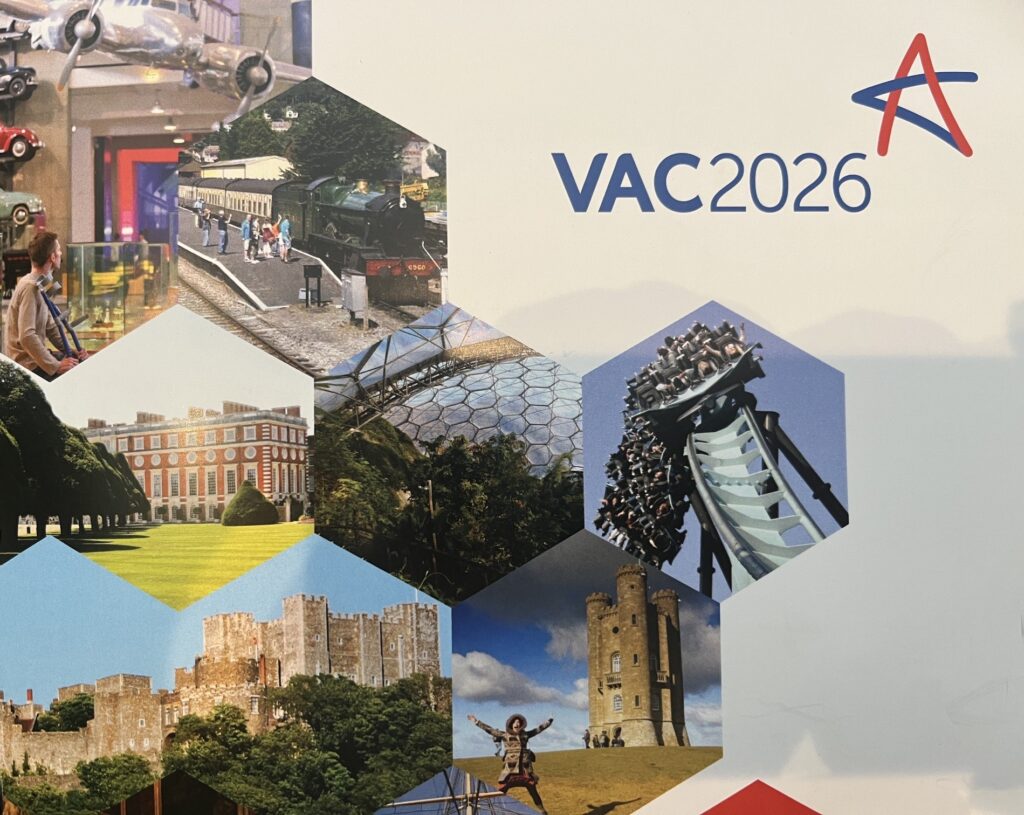
Every autumn we head to London for the Visitor Attraction Conference (VAC) to spend a day with people who do what our clients do. We hear what’s working for attractions across the country, see how our clients’ visitor experiences compare, and come home with ideas to test.
This year’s line-up brought together some of the UK’s best-known attractions alongside the latest research from ALVA (the Association of Leading Visitor Attractions), VisitBritain, the Met Office and the Tourism Alliance.
You don’t need us to tell you it’s been a hard few years. So here’s what we took away instead: who’s still booking, what’s persuading them, and what owner-managed attractions, accommodation and hospitality businesses can do about it before 2027.
What’s the state of the UK visitor economy in 2026?
In short: people still want days out and short breaks. They’re just choosing more carefully and deciding later.
The figures that stood out:
- Summer was a rollercoaster. ALVA member figures show June 2026 down 16% on a June 2025 that was already described as “brutal”. Late summer then picked up.
- Last winter was the bright spot. Attractions with winter lights and strong Christmas events saw visitor numbers rise by as much as 10%.
- The UK is expensive to visit. The Tourism Alliance highlighted that the UK ranks 113th of 119 countries for price competitiveness.
- Intention is rising. According to VisitBritain’s Domestic Sentiment Tracker (September 2026), 78% of UK adults plan an overnight UK trip in the next 12 months, up from 74% a year ago.
How can I draw more visitors to my tourist attraction?
Give people a clear reason to visit now, and a day that feels worth every pound. That’s what the attractions doing well this year all have in common.
What’s working:
- Seasonal programming: spring, autumn and Halloween, which is taking off in a big way.
- More to do, later in the day: live shows, and evening and after-dark events such as pumpkin patch nights.
- Behind-the-scenes and premium experiences: people will pay more for something special, though expectations are higher too.
- Rituals with a twist: Christmas and Easter traditions people return to, but not exactly the same each year.
- FOMO moments: limited-time events, anniversaries and “don’t miss it” exhibitions.
- Online audiences: some attractions are now reaching far more people on YouTube than through their gates, and turning that into bookings, shop sales and support.
“Joy for money, not value for money” has been a theme at VAC for a few years now, and this year’s speakers showed it’s still key.
Who’s visiting UK attractions right now?
Families are still at the heart of it, but the family has changed. “Family time or time with my partner” is the number one reason people give for a UK break (44%, VisitBritain Domestic Sentiment Tracker). Increasingly, it’s grandparents treating their adult children and grandchildren.
Other groups to keep an eye on:
- 35–54s without children at home: a big, varied market, and great for filling quieter midweek and off-peak dates.
- Over-65s: the wealthiest generation in UK history.
- Countryside lovers: countryside trips are rising fast (27%, up from 21%), and walking is the second most popular holiday activity after local food and drink.
What marketing works for visitor attractions in 2027?
Marketing that answers people’s real worries (the weather, cost and whether it’s worth it) and reaches them when they decide. Here are six things to think about.
1) Plan for the weather, whatever it does
UK weather is now the number one reason people give for not booking a UK trip (35%), ahead of cost. The Met Office recorded 30 days over 28°C this summer, compared with an average of around 7 a year until recently. Prepare for wetter winters and more named storms too.
Ask yourself: what does a visit look like on a scorching day, or a washout?
Quick win: Show your all-weather options clearly on your website and socials, and be ready to flex opening hours when the heat hits, especially if you welcome dogs.
2) Keep giving people a reason to come back
Visitors aren’t coming more often. They’re visiting about as much as before and choosing more carefully where to go. The attractions keeping their repeat visitors keep moving. Some are adding more, such as live shows and after-dark events. Others are refreshing what they already do or raising the quality. Most are watching what’s working elsewhere.
If your offer looks the same as last year from the outside, past visitors have no reason to think anything’s changed.
Quick win: List what’s new or better since last year, however small, and lead with it. Then pick one idea from another attraction, or another sector, that you could adapt.
3) Make it feel worth it
When people say “too expensive”, they often mean “I’m not sure it’ll be worth it”. Only 18% name the cost of attractions as a barrier. The squeeze is on the extras, like eating out.
Quick win: Spell out what’s included and what makes your day special, rather than reaching for a discount.
4) Be there when people decide
Most people research around six weeks ahead but decide within 24 hours. That makes the last few days before a visit one of your most important marketing windows.
Quick win: Keep social posts timely and booking-focused right up to the day, and make availability easy to find.
5) Rethink who your “family” is
If your family ticket assumes two adults and two children, it may not fit the grandparents booking for three generations.
Quick win: Look at who’s actually booking, and check your tickets and facilities work for every age.
6) Look beyond the gate
Some attractions are building online audiences far bigger than their visitor numbers with niche, authentic and generous content. That following can turn into visits, sales and support.
Quick win: Start small. What do you know that your audience would love to see?
What this means for you
Family attractions: Points 1, 2 and 5 are key. Make your rainy-day plan as visible as your sunny one, give returning families something new each season, and check your family ticket works for grandparents booking for three generations.
Holiday accommodation and short breaks: Lean into 35–54s without children at home and the over-65s to fill midweek and off-peak dates. They aren’t tied to school holidays. Spell out what’s included, and keep last-minute availability visible.
Cafés, restaurants and food producers: The squeeze is on extras like eating out. Seasonal menus, special touches and a clear reason to treat yourself is important.
Outdoor, adventure and wellbeing: Countryside trips and walking are rising, and “time with my partner” is a top reason to travel. Your weather messaging needs to be the most confident of anyone’s.
Small attractions: You don’t need a YouTube team or a winter lights budget. Most of these quick wins cost time, not money.
If visitors are cautious, give them confidence. If they’re deciding late, be there when they decide. If they’re choosing carefully, give them a reason to choose you.
Frequently asked questions
How can I get more bookings for my Christmas event?
Christmas often sells out early, so the first job is making sure people know when tickets go on sale and what’s new this year, even if the tradition stays the same. There’s usually a second wave of people looking for last-minute availability too, so keep posting right up to your final dates and make it easy to see what’s left. Attractions with strong winter events saw visitor numbers rise by as much as 10% last year (ALVA).
We’re also wondering whether Christmas bookings will come a little later this year. Pumpkin patches, after-dark trails and firework events have grown, and families may be spending in October before turning to Christmas. If your bookings are slower than last year, timing may be part of it.
How can I increase visitor spend at my attraction?
Focus on quality rather than quantity. Visitors are buying fewer items but spending more on special ones, so exclusive products, upgrades and behind-the-scenes experiences tend to sell better than discounts.
How can I fill quieter midweek and off-peak dates?
Target audiences who aren’t tied to school holidays, such as 35–54s without children at home and the over-65s. Seasonal programming in spring and autumn, and evening events, also give people a reason to visit outside the summer peak.
What stops people booking a UK day out or short break?
The top barriers are UK weather (35%), the rising cost of living (29%) and the cost of holidays and leisure (28%), according to VisitBritain’s Domestic Sentiment Tracker (September 2026). Clear all-weather messaging and showing the value of your experience help with all three.
Want the full picture?
This is just a snapshot. We’ve put together a more detailed briefing covering visitor trends, audience insights, pricing ideas and what it all means for your business.
Small attractions are close to our hearts, which is why we’re proud to sponsor the Small Attraction Award at this year’s South West Visitor Awards.
Whether you’re looking to welcome more visitors, increase dwell time or grow average spend, we’d love to hear from you.
Sources: ALVA; VisitBritain Domestic Sentiment Tracker (September 2026); Met Office; Tourism Alliance.